
Beyond Lifts Comparative Clarity for the Modern Pallet Stacker Fleet
Introduction
Speed without sense wastes money. Your pallet stacker looks busy, but is it earning its keep? Picture a dawn shift: bays humming, pickers queued, one aisle jammed while another sits quiet as a church mouse. Many sites lose double-digit time to avoidable holds and zigzag travel—funny old world, innit? Now, have a butcher’s at the stacker forklift problem from the ground floor. Reports often show idle runs, repeat lifts, and misaligned routes. Yet the fix gets framed as “add more trucks” or “train harder.” Blimey, that’s like throwing tea at a leaky roof. So here’s the question: are you tuning flow, or just masking friction with noise (and cost)?

I’ll keep it straight and friendly—proper London style. The data points tell a tale, but the shop floor tells the truth. When the clock’s ticking and the dock’s stacked, you need kit that moves clever, not just quick. Right, let’s crack on.
The Hidden Snags in Traditional Fixes
Why do old fixes keep failing?
Unlike the high-level overview you may have seen earlier, let’s get practical and technical. The stacker forklift is often judged by lift height, speed, and battery hours. Fair. But traditional setups hide pain points. First, routing is stale. Operators waste minutes dodging blockages because task queues don’t align with live floor conditions. Second, you get data deserts. Little or no telemetry means managers fly blind. Third, power is treated like a simple “charge and go.” In reality, the battery management system (BMS) and power converters need to sync with shift rhythm, not fight it. Look, it’s simpler than you think—optimize the flow, then the machine.
Integration is the next snag. Many sites bolt the truck to a WMS and call it a day. But the WMS talks in orders; the truck lives in seconds. Without a thin layer that interprets aisle congestion, fork staging, and slot turns, you get stop-start chaos—funny how that works, right? Even basic signals on a CAN bus can reveal when forks hover, when pallets stall, and where the choke points lurk. If that data never feeds task logic, your “upgrade” is just lipstick on a delay.
Comparative Paths and What’s Next
What’s Next
Here’s the forward look, a bit more semi-formal. Old-school logic pushes jobs; new principles pull from real-time context. Compare two paths. Path A: fixed routes, fixed breaks, fixed guesses. Path B: adaptive tasks fused with floor signals. With Path B, the stacker forklift gets tasks that respect traffic, charger queues, and pallet priority. Small sensors—LiDAR or even simple proximity—feed edge computing nodes that nudge the next move. Not sci-fi. Just tight loops, short decisions, fewer deadheads. And when the queue shifts, the plan shifts. No drama—just flow.
Real-world impact stacks up. Idle lifts drop as forks meet pallets closer to demand. Micro-pauses shrink because task swaps happen before a jam forms. Energy stretch improves when BMS data informs route length and lift frequency. You don’t need full autonomy to win. You need models that learn your aisles and share state fast. Side by side, an adaptive system beats a static one on three fronts: travel, charge, and wait. It feels calm on the floor—and that calm is money.
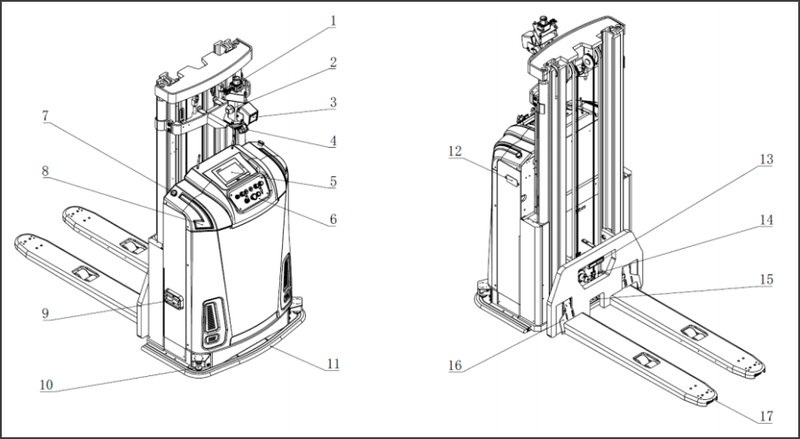
To wrap, let’s stay practical with an evaluative close. Three metrics tell you if you’re on the right track: 1) deadhead ratio per shift, 2) charge-cycle efficiency per operating hour, and 3) task handoff latency between WMS and truck logic. Improve those, and the rest follows—fewer bottlenecks, smoother picks, happier crews. That’s the kind of quiet progress that pays. For deeper frameworks and examples, have a look at SEER Robotics.