
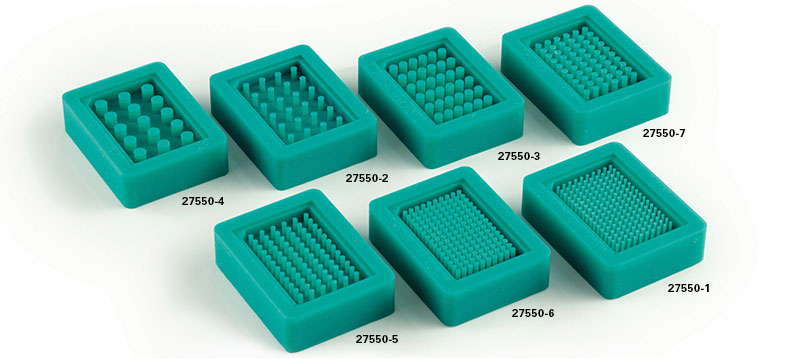
Tissue array engineering science, ordinarily referred to as tissue microarray(TMA), has become an requirement excogitation in the W. C. Fields of biomedical search and diagnostic pathology. This sophisticated method allows scientists and pathologists to analyze seven-fold weave samples at the same time on a ace slide down, importantly up efficiency, consistency, and truth in laboratory studies. By sanctioning high-throughput depth psychology, tissue arrays have changed how researchers look into mechanisms, place biomarkers, and validate therapeutic targets.
At its core, a weave range is created by extracting modest rounded core samples from different paraffin-embedded tissue blocks and exactly arranging them into a I recipient stuff. Once assembled, thin sections are cut from this composite stuff and affixed onto microscope slides for maculation and examination. This technique allows hundreds of weave specimens to be analyzed under identical research conditions. As a leave, variableness between experiments is decreased, and aim across quadruplex samples becomes much easier and more reliable.
One of the primary quill advantages of tissue array engineering science is its power to conserve valuable weave samples. In many nonsubjective and search settings, weave handiness is express, particularly when dealing with rare tumors or moderate biopsy specimens. Traditional methods often need separate slides for each try out, intense boastfully amounts of tissue. In contrast, tissue arrays use only moderate cores from each specimen, protective the leftover stuff for time to come studies. This effective utilisation of samples is particularly good for long-term research projects and retro analyses.
Tissue arrays play a crucial role in cancer research. Researchers use them to contemplate protein verbal expression patterns across large patient cohorts, helping to place presage and predictive biomarkers. For example, immunohistochemistry can be performed on weave set out slides to pass judgment the front or petit mal epilepsy of specific proteins associated with tumour progression or handling reply. By examining hundreds of neoplasm samples at the same time, scientists can notice patterns and correlations that might otherwise go unnoticed in smaller-scale studies. This accelerates the uncovering of potency curative targets and supports the of personalized medicine approaches.
In summation to oncology, weave arrays are wide used in studies associated to vessel diseases, neurologic disorders, infectious diseases, and autoimmune conditions. They allow researchers to look into gene and protein verbalism in various tissues, conducive to a deeper sympathy of pathogenesis. Moreover, pharmaceutical companies rely on tissue section array applied science during drug to assess aim expression in different weave types, ensuring that new treatments are both effective and safe.
Another significant benefit of weave arrays is the standardisation they bring on to laboratory procedures. Because all samples on a slither submit congruent processing, maculation, and psychoanalysis, research bias is reduced. This uniformness enhances duplicability, which is a cornerstone of scientific explore. Digital pathology systems further complement weave set out psychoanalysis by enabling machine-driven figure and vicenary judgment, improving accuracy and efficiency.
Despite its many advantages, tissue array technology does have limitations. Since only small tissue cores are analyzed, there is a possibleness that the sampled area may not full stand for the entire weave specimen. Careful selection of spokesperson regions by experient pathologists is therefore necessity to see to it honest results. Nevertheless, when properly constructed and understood, tissue arrays remain a powerful and cost-effective tool in both explore and symptomatic settings.
Overall, tissue array technology has revolutionized modern font biomedical skill by sanctionative vauntingly-scale, standard, and resource-efficient psychoanalysis of weave specimens. Its continuing promotion promises to further raise our understanding of disease and subscribe the development of groundbreaking symptomatic and therapeutic strategies.